



By Jack Dell'Accio, Certified Sleep Coach, CEO & Founder of Essentia
Key Takeaways
- The pursuit of perfect sleep can sometimes increase sleep anxiety rather than improve rest.
- Orthosomnia is an emerging term describing an unhealthy obsession with optimizing sleep data.
- Consumer sleep trackers can provide useful trends but are not always accurate enough to diagnose sleep quality.
- Many popular wellness hacks offer limited evidence compared to fundamental sleep habits.
- The most effective ways to sleep better naturally remain consistency, darkness, temperature regulation, supportive comfort, and a healthy sleep environment.
- Creating the right sleep conditions often matters more than chasing the latest sleep optimization trend.
In This Article
- The rise of orthosomnia: when sleep tracking becomes counterproductive
- What sleep scientists actually say about wearable accuracy
- The wellness "fixes" that don't always move the needle
- Why chasing a perfect sleep score creates more sleep anxiety
- The fundamentals that actually work
- The case for doing less, intentionally
- Build your sleep around the fundamentals
Sleep has never been more popular. Wearable trackers, sleep apps, supplements, mouth tape, red light devices, viral sleepmaxxing routines. It can feel like the perfect night's sleep requires an ever-growing collection of products and habits.
I've spent two decades building mattresses and working alongside elite athletes on recovery. Here's what I keep coming back to: for a lot of people, simplifying your approach to sleep is the healthier path forward.
The Rise of Orthosomnia: When Sleep Tracking Becomes Counterproductive
Wearable technology has transformed how we think about sleep. People wake up and check their sleep score before they ask themselves the simpler question: how do I actually feel?
This shift has given rise to a term I've been using with athletes for years: orthosomnia.
Orthosomnia describes an unhealthy fixation on achieving "perfect" sleep based on data from a wearable device. Instead of sleeping more peacefully, people become preoccupied with optimizing every metric, sometimes at the expense of sleep itself.
Here's the irony. Worrying about getting perfect sleep can make it harder to fall asleep in the first place.
For some people, this creates a real cycle of sleep anxiety, where bedtime becomes associated with performance instead of rest. Instead of trusting their body's natural rhythms, they start chasing ideal numbers that may not reflect how restorative their sleep actually was.
I get the intention. We all want better sleep. But when optimization becomes obsession, it works against the very goal we're trying to achieve.
What Sleep Scientists Actually Say About Wearable Accuracy
I'll be upfront: I'm into the trackers. I wear a Whoop, I wear an Oura, I've tried most of what's out there. They're genuinely useful tools when you know how to use them.
Using movement, heart rate, skin temperature, and blood oxygen levels, many devices estimate:
- Sleep duration
- Sleep stages
- Resting heart rate
- Overnight recovery
- Sleep efficiency
These insights are useful for spotting long-term patterns. But treat consumer devices as estimates, not medical-grade tools.
Research shows that while wearables estimate total sleep duration reasonably well, they're considerably less accurate at identifying individual sleep stages like REM or deep sleep. Most devices infer sleep from indirect measurements. They're not measuring brain activity directly, the way a sleep lab does.
In other words, your sleep score is an estimate, not a diagnosis.
💡 A Habit I've Carried Over From Coaching Athletes
We used to tell our athletes to look at a 10-day average instead of any single night. These days, weekly is just fine. Everyone has a bad night. What actually matters is whether you're trending in the right direction over 7 days, not what your app told you this morning.
Stop obsessing over a single night's score. Look for the broad trend over weeks. And pay just as much attention to how rested and alert you actually feel during the day.
The Wellness "Fixes" That Don't Always Move the Needle
Modern wellness culture suggests better sleep is just one more purchase away. Social media is full of recommendations for:
- Multiple sleep supplements
- Expensive biohacking gadgets
- Blue-light glasses
- Mouth taping
- Specialized sleep drinks
- High-tech sleep devices
Some of these may help specific people in specific situations, and I've tried plenty of them myself. But for the average healthy adult, most of these offer modest returns next to the fundamentals.
Supplements and technology aren't the enemy. They should support the habits that produce better sleep, not replace them. Every small sleep problem doesn't need a new product. Sometimes less really is more, and that's a philosophy I try to build every mattress around.
Why Chasing a Perfect Sleep Score Creates More Sleep Anxiety
Sleep is unique. It cannot be forced. Unlike exercise or work, trying harder rarely produces better results. One of the defining features of insomnia is the increasing effort people invest in trying to sleep.
Monitoring every metric, adjusting your routine constantly, worrying about hitting a perfect number, all of that raises your physiological arousal right when you need it to drop. If the data from your trackers is adding stress to your day, reducing your performance, or adding anxiety, you've overcorrected. You've got to find the balance between using that information as a tool and letting it run you.
This is where sleep anxiety develops. Instead of bedtime being recovery, it becomes a nightly performance review:
- Did I get enough REM?
- Why was my readiness score lower?
- Should I change supplements?
- Am I doing something wrong?
These questions replace the much healthier mindset of simply preparing the body for rest.
The Fundamentals That Actually Work
If popular biohacks offer limited returns, what actually works? The answer isn't glamorous. It's remarkably simple.
Consistency: Why Bedtime Matters More Than the Latest Supplement
Your circadian rhythm thrives on regularity. Going to bed and waking at approximately the same time each day reinforces your body's natural sleep-wake cycle. Weekend sleep-ins and shifting bedtimes confuse that rhythm and make it harder to fall asleep naturally. Consistency remains one of the strongest evidence-based recommendations for how to sleep better naturally, and one I still have to remind myself of.
Darkness: The Simplest Free Upgrade Most People Skip
Light is one of the most powerful regulators of your circadian rhythm. Artificial light in the evening delays melatonin production and makes it harder to get sleepy. A darker bedroom is simple and inexpensive:
- Blackout curtains
- Covering electronic lights
- Reducing screen exposure before bed
- Using dim, warm lighting in the evening
These sleep hygiene basics often produce greater benefits than expensive wellness gadgets.
Temperature: The Underrated Lever
Your body naturally lowers its core temperature as part of the transition into sleep. When your bedroom or mattress traps heat, that process becomes harder. Thermoregulation is one of the most important levers in sleep science because temperature influences:
- Sleep onset
- Deep sleep
- Nighttime awakenings
- Overall sleep quality
Creating a cooler sleep environment doesn't mean cranking the thermostat down. Breathable bedding, natural materials, and sleep surfaces designed for airflow support your body's own cooling mechanisms. It's the same principle behind our Organic Active Cooling technology: it doesn't force a temperature on you, it works with your body so heat dissipates naturally, all night long.

Comfortable Support: The Surface You Spend Eight Hours On
We spend roughly one-third of our lives in bed. Yet most people spend more time evaluating their supplement stack than the surface supporting their body every night. A mattress that properly distributes pressure and maintains spinal alignment removes an obstacle to restorative sleep you didn't even know was there. Think of your mattress as the foundation that supports every night of recovery, not just another product.
Clean Sleep Materials: Removing What Disrupts Sleep at the Source
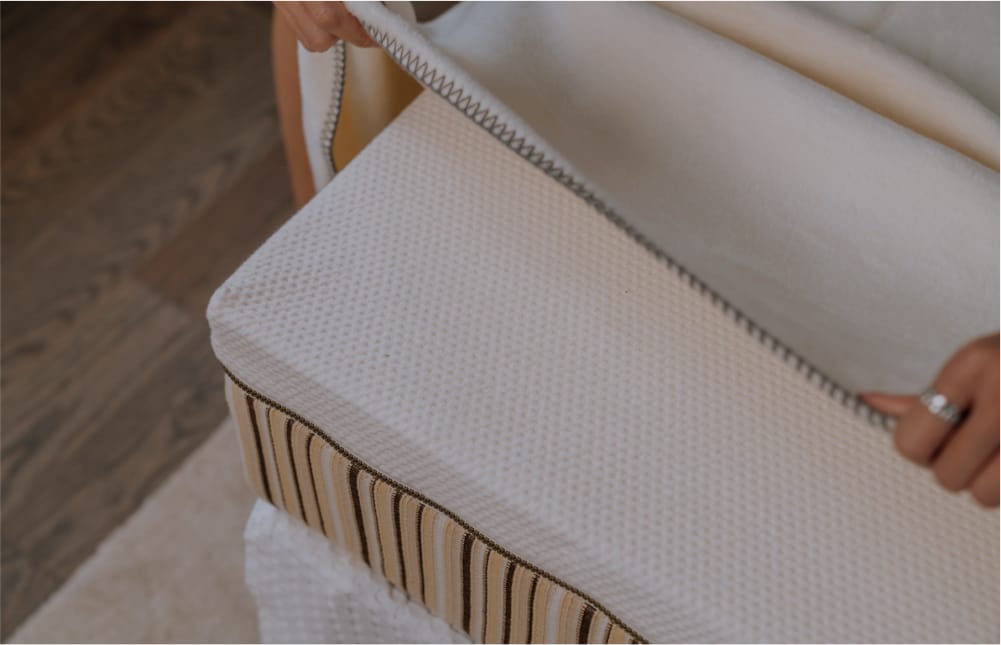
Sleep wellness isn't only about what you add. Sometimes it's about what you remove. Choosing products made with thoughtfully selected, certified organic materials creates a cleaner sleep environment while reducing synthetic foams and unnecessary chemical inputs.
That's the philosophy behind our Beyond Latex™ organic foam. Instead of polyurethane-based memory foam, it uses GOLS-certified organic latex engineered for pressure-relieving comfort and a cleaner sleep environment. Material choices are part of the same system as temperature regulation or supportive comfort. They're not another hack to chase.
The Case for Doing Less, Intentionally
The wellness industry rewards complexity: more supplements, more devices, more tracking, more data. In all my years doing this, good sleep has never depended on the longest checklist. The most consistent advice I keep coming back to is remarkably simple:
- Maintain a regular schedule.
- Sleep in a cool, dark room.
- Limit unnecessary stimulation before bed.
- Choose supportive, breathable sleep surfaces.
- Create a healthy environment you can trust night after night.
These practices won't generate impressive social media posts. But they remain among the most effective strategies for improving long-term sleep wellness. Sometimes the smartest form of sleep optimization is knowing when to stop optimizing.
Build Your Sleep Around the Fundamentals
There's nothing wrong with being curious about new wellness trends or using technology to understand your sleep better. I still wear my trackers every night. But the goal shouldn't be a perfect score. It should be waking up genuinely restored.
Rather than adding another gadget or supplement, invest in the foundation of your sleep environment. A supportive mattress, breathable bedding, thoughtful temperature regulation, and clean materials work quietly in the background every night, without requiring constant attention.
That's the philosophy behind every product we build at Essentia. Less time optimizing. More time simply sleeping well.
Sleep well, be well.
Jack Dell'Accio
Certified Sleep Coach
CEO & Founder, Essentia
Ready to build your sleep around the fundamentals?
Start with the surface you sleep on every single night.
Shop Organic Mattresses