



In This Article
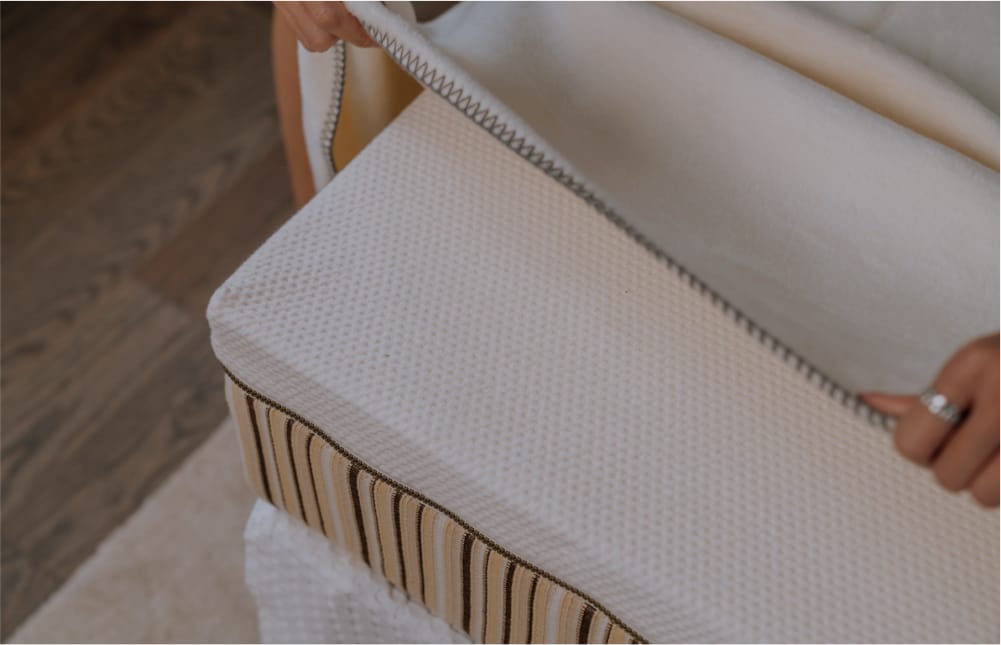
Concussions are a hot-button topic across every contact sport, and it's one I've wanted to understand better for a long time. Many pro athletes sleep on our ProCor P1 mattresses, so when Dr. David Soria, MD, FAAEM, a trauma and emergency care specialist, came to us to evaluate how Essentia mattresses could help his players recover from sports-related concussions, I was thrilled at the opportunity.

What Dr. Soria's Evaluation Taught Me About Concussion Recovery
What I learned from Dr. Soria's evaluation is that the primary path to concussion recovery is getting as much rest as possible while minimizing stimuli to the brain. Concussion sufferers are three times more likely to develop sleep disorders, from insomnia to excessive daytime sleepiness, which makes the sleep environment itself part of the treatment, not just a backdrop to it. Dr. Soria found that Essentia products are expected to help accelerate recovery by supporting three environment characteristics his research points to as critical:
✅ What Concussion Recovery Needs From the Sleep Environment
- Oxygen levels: a clean-air, low-VOC environment supports the oxygen absorption a recovering brain needs.
- Core temperature: a cooler sleep surface helps regulate brain temperature, which rises after a concussion and increases vulnerability to further injury.
- Minimized brain stimuli: post-concussion brains are more sensitive to disruption, even slight drops in oxygen or shifts in temperature can trigger added stress on an already-injured brain.
As Dr. Soria highlights in his evaluation, Essentia mattresses provide a low-VOC, clean-air environment. That finding traces back to independent air quality testing by Dr. Van Hiep at EXP Inc., which found Essentia foam's VOC emissions equivalent to breathing outdoor air, among the lowest of any bedding product tested. Because VOCs consume oxygen and generate ozone as they off-gas, a cleaner-air mattress means more of the oxygen a recovering brain needs stays available in the sleep environment. Essentia mattresses also help regulate core body temperature by sleeping cooler than the body over an eight-hour sleep cycle.
💡 Backed By a Double-Blind Sleep Study
We ran a double-blind sleep study with 75 professional athletes over 10 weeks, and the results showed up to a 20% to 60% improvement in REM and Deep Sleep, the two stages where the body does most of its physical and cognitive repair. That's the same recovery window Dr. Soria is talking about when he talks about minimizing brain stimuli.
Now that we understand a bit more about concussion recovery from Dr. Soria, I want to share something that's been on my mind since I first started working with athletes on this issue.
The NFL's New CTE Study, and Why Recovery Can't Wait
A study published in The BMJ in August 2026 gave the sports world one of its clearest pictures yet of how common chronic traumatic encephalopathy (CTE) is among former NFL players. Researchers from Mass General Brigham and Boston University's UNITE Brain Bank identified 878 former players who appeared in at least one NFL game and died between 2016 and 2021, then examined the 235 brains that had been donated for study. At least 25% had CTE, a figure the study's lead author called a conservative, "low end" estimate, since not every player in that group had a brain available to examine. Within the smaller pool of brains specifically donated to the UNITE Brain Bank, 93% showed signs of the disease. (NPR, citing The BMJ)
What sets this study apart from earlier CTE research is the scale and the method. Instead of relying only on the brains families chose to donate, researchers cross-referenced demographic data and death certificates for every player who had appeared in an NFL game, giving a fuller picture of how CTE shows up across the broader player population, not just the cases that get studied. The NFL Players Association took the findings seriously enough to send a statement to every player and agent the same day, calling the results "a sobering reminder that football carries serious risks that can have lasting consequences for players and their families."
⚠️ An Important Distinction
CTE can currently only be diagnosed after death, and there is no cure. Essentia mattresses do not treat, prevent, or cure CTE. What this study renews is a more immediate question: how do we support an athlete's brain during recovery in the days, weeks, and months after a concussion, while they're still living it?
What Essentia's protocol actually addresses: concussion recovery in living, active athletes, using rest and a supportive sleep environment, not a treatment for CTE itself.
That question isn't new to me. I've spent more than 15 years working with athletes, including partnerships with NFL teams, on recovery protocols for active players. I recently sat down to talk through what this new study means and why I still believe rest and the right sleep environment have to be part of the answer.
To be clear, none of this replaces medical care or return-to-play protocols overseen by team physicians and specialists like Dr. Soria. What I've seen over 15 years of working with players is that rest, and specifically undisturbed, quality sleep, is one of the most controllable factors in how well and how quickly an athlete recovers between the injury and the day a doctor clears them to return.
Inclined Sleep for Concussion Recovery
As a Certified Sleep Coach, the piece of my own protocol I come back to most for concussion recovery is inclined sleep. I've been working with athletes on this for over 15 years, and every time there's a concussion I'm dealing with, I go to a protocol of inclined sleep. Inclined sleep basically eliminates that cranial pressure, promotes lymphatic drainage, and is really helpful for rest and recovery, accelerating recovery from concussions.
It lines up directly with what Dr. Soria's evaluation points to. Reducing cranial pressure and supporting drainage is another way of minimizing brain stimuli and giving a recovering brain the conditions it needs to rest. For years, achieving that meant custom-rigging a player's bed to the right angle. Today, we've built automatic incline adjustment into our Align X Adjustable Base as a standard feature, so any athlete, or anyone recovering from an injury, can get that same positioning without the rigging.
💡 What Inclined Sleep Does
Raising the head of the bed reduces intracranial pressure and supports the brain's natural glymphatic drainage, its overnight cleanup process, while you sleep. It's a practice I've relied on with athletes for over 15 years, and one we've since made a standard feature on Align X. You can read the full breakdown in Incline Sleep 101: The Benefits of Inclined Bed Therapy.
With that in mind, I wanted to get an athlete's own perspective on what recovering from this kind of brain trauma actually feels like.
Jack Dell'Accio, Certified Sleep Coach, Discusses Concussions and Recovery with Max Pacioretty, NHL Athlete

Jack Dell'Accio: You mentioned in the interview with the National Post about your concussion that: "I slept most of those two days." Was this something you were told to do by your doctors, or was it more instinctual, based on what your body was telling you it needed?
Max Pacioretty: I felt tired all the time with my concussion. I didn't have family around and I was in a hotel room, but my body felt so fatigued I had no problems falling asleep. The doctors recommended rest, but I felt so comfortable with my eyes closed lying down that sleeping was the best way for me to feel normal.
Jack: After those two days, was sleep still something your body was craving?
Max: I was definitely still a bit more tired than usual, but after those two days and returning to Montreal, I felt like those two days of sleep really helped me recover, and were the first step in healing.
Jack: You got back to the ice pretty quickly after the injury. Was your body telling you it was ready?
Max: Yes, I felt completely ready when I returned. With my body being shut down for a good amount of time, it took a few days to catch back up with the speed of working out and skating, but I no longer felt any symptoms.
Jack: Can you talk about being that in tune with your body that you understand when it's ready? With a brain injury there's no set timeline, so how did you know you were ready to get back on the ice?
Max: When I began to feel normal in everyday situations, and in every possible situation on the ice as well. It's an injury you cannot risk coming back early from, so you always tend to be a little more cautious with the recovery.
Jack: The NHL announced there will be a "spotter" at every game to help determine if a player is exhibiting visual signs of a concussion. With your concussion, did you find your symptoms were noticeable?
Max: It's a good initiative to implement the "spotter" into the protocol. My situation was different. I knew right away I had a concussion, and the doctors and trainers knew right away too. They handled the situation perfectly in my eyes.
Jack: Now that you're sleeping on an Essentia ProCor mattress, how do you feel it's helped you recover from the daily grind, or from more severe injuries like your recent knee injury?
Max: I feel that most of my recovering from injuries happens while I sleep. Sleep, in my mind, is the most important part of recovery, so I feel that getting the best sleep possible will help with overall recovery. That's why I felt the need to search for the best mattress, and I felt the Essentia mattress was the best out there. I'm definitely satisfied with the quality of sleep I've been getting.
Talking with Max, I kept coming back to how closely his experience lines up with what I've seen across 15 years of working with athletes: the ones who take recovery, and specifically sleep, seriously tend to come back stronger and with fewer setbacks. His instinct to sleep as much as his body asked for wasn't just comfort. It was his body doing exactly what Dr. Soria's evaluation describes, using rest to minimize stimuli and give the brain room to recover.
Thanks to Max for taking the time to give us an athlete's perspective on concussion recovery. You can read Dr. David Soria's full evaluation of Essentia mattresses and recovery from sport-related concussions.
Have you or your child ever suffered from a concussion? Have an opinion on sports concussions? Share your thoughts below.
Be Well
Jack
Concussion Recovery and Sleep: Frequently Asked Questions
Does sleep help with concussion recovery?
Rest is one of the primary recommendations doctors give for concussion recovery, particularly in the early days after injury. Sleep gives the brain the chance to recover with minimal additional stimuli, which is why specialists like Dr. Soria emphasize a low-stimulation, well-regulated sleep environment during recovery.
What is CTE?
Chronic traumatic encephalopathy (CTE) is a degenerative brain disease linked to repeated head impacts. It can currently only be diagnosed after death, through examination of brain tissue, and there is no cure. A 2026 study found at least 25% of former NFL players who died between 2016 and 2021 had CTE.
Can a mattress prevent or treat CTE?
No. No mattress or sleep product treats, prevents, or cures CTE. A supportive sleep environment can help with recovery from a concussion in a living athlete, which is a separate matter from CTE, a disease that can only be identified after death.
What should I look for in a mattress for injury recovery?
Based on Dr. Soria's evaluation, the environment characteristics that matter most for recovery are clean, low-VOC air to support oxygen levels, temperature regulation to help maintain core body temperature, and a sleep surface that minimizes disruption and stimuli overnight.
Curious what makes ProCor different for athletes managing recovery?
Built around the same recovery principles Dr. Soria evaluated: clean air, temperature regulation, and a sleep surface designed to support the brain and body, not just cushion them.
Explore ProCor P1 for Athletes