



Waking up overheated in the middle of the night is more than an inconvenience. It disrupts deep sleep, leaves you groggy the next day, and can turn what should be eight hours of recovery into a nightly struggle. Many people blame the room temperature, their pyjamas, or even stress. But often, the real culprit is much closer to the problem: the mattress itself.
What you sleep on plays a direct role in how your body manages heat at night. If your mattress traps warmth instead of releasing it, your body has to work harder to cool down. Over time, that battle can affect sleep quality, recovery, and overall health. This is where the idea of a truly cooling bed comes in, and where natural memory foam is changing how temperature regulation works.
Understanding why some mattresses sleep hot, and others do not, starts with the science of materials.
The Science of Sleep Heat: Why Traditional Foam Traps Warmth
Your body needs to cool down slightly to fall into deep sleep. Core temperature drops as you move through the sleep cycle, especially during REM. When a mattress interferes with this process, rest becomes fragmented.
Traditional memory foam is known for its pressure relief, but it earned a reputation for sleeping hot for a reason. Most conventional foams are made using petroleum-based chemicals and designed with a closed-cell structure. In simple terms, the foam cells are packed tightly together, leaving very little space for air to move.
When you lie down, your body heat gets absorbed into the foam. Because there is limited airflow, that heat has nowhere to go. Instead of dissipating, it reflects back toward your body. This creates the familiar “heat bubble” many sleepers complain about.
Some manufacturers attempt to fix this by adding cooling gels or phase-change materials. These can help at first, but they often lose effectiveness over time or only provide surface-level cooling. The core issue remains the same: restricted airflow.
To truly address heat retention, the foam itself has to change.
Beyond Latex™ Organic Foam: A Breakthrough in Temperature Regulation

Essentia’s patented Beyond Latex™ organic foam was developed to solve a problem no other material had been able to address: how to deliver the slow-response, pressure-relieving feel people associate with memory foam without relying on synthetic chemistry or heat activation.
Unlike traditional memory foam, which is petroleum-based and designed to soften as it warms, Beyond Latex™ organic foam is made entirely from organic latex inputs and responds to pressure rather than heat. This fundamental difference changes how the mattress manages temperature.
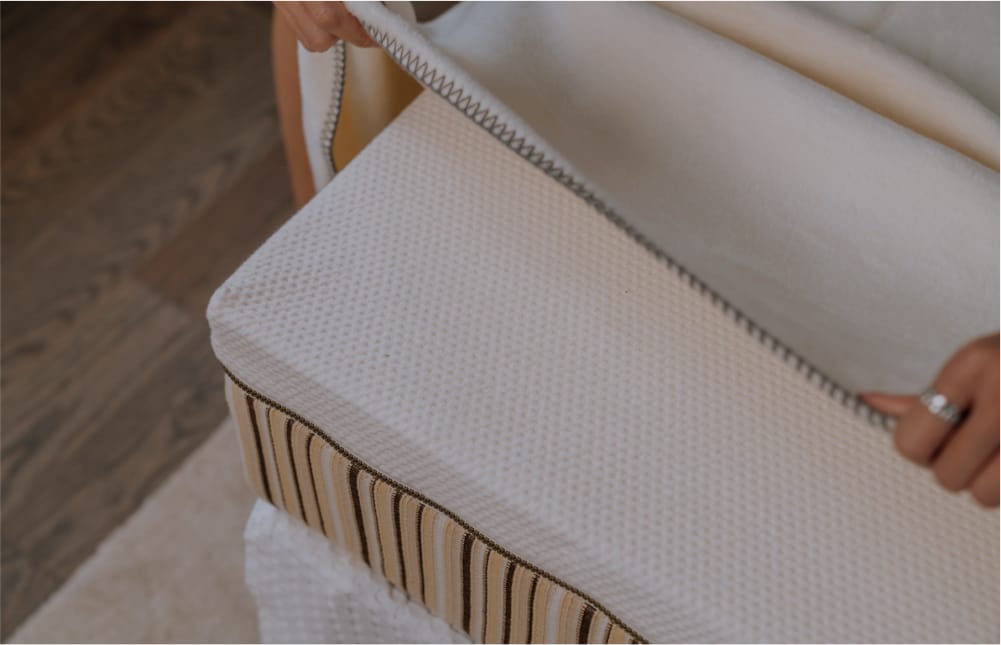
Because Beyond Latex™ organic foam does not rely on body heat to contour, it maintains its structure throughout the night. Air can move through the foam instead of being trapped, allowing excess heat and moisture to dissipate naturally. This prevents the deep sink and heat buildup that many sleepers experience with conventional foam mattresses.
There is no comparable slow-response organic latex foam on the market. Beyond Latex™ is not a modified memory foam, and it is not standard latex. It is latex evolved to behave differently, offering the familiar cradle of memory foam while preserving latex’s natural breathability, resilience, and durability.
For anyone searching for a truly temperature controlled mattress, this distinction is critical. Effective temperature regulation isn’t about adding cooling gels or surface treatments. It’s about using a material that allows your body’s temperature to drop naturally and stay there, supporting deeper, more restorative sleep.
Building Your Cooling Bed: Beyond Just the Mattress

Even the best mattress cannot regulate temperature in isolation. A true cooling bed is a system, not a single product. The mattress core works together with the base, frame, and surrounding environment to manage heat.
Airflow underneath the mattress is especially important. Solid platforms or non-breathable foundations can trap heat, reducing the effectiveness of even the most breathable foam. Slatted bases or adjustable foundations with space for air circulation help heat escape downward instead of building up.
Room ventilation matters too. A mattress designed for airflow performs best in a space where air can move freely. This does not mean sleeping in a cold room, but rather ensuring that warm air is not trapped around the bed.
Lifestyle factors also play a role. Hydration, bedding choices, and evening routines all influence body temperature. For readers interested in optimizing sleep beyond materials, this guide on sleep optimization explains how small changes can support deeper rest.
How to Layer for Success: Pair Your Mattress with Cooling Bed Sheets

One of the most overlooked causes of overheating is bedding. Even a highly breathable, natural mattress can be suffocated by the wrong sheets.
High-thread-count cotton, while soft, is often tightly woven. This restricts airflow and traps heat. Polyester and microfiber sheets are even worse, as they do not breathe and tend to reflect heat back toward the body.
If you are investing in a temperature-focused mattress, pairing it with the right cooling bed sheets is essential. Natural, moisture-wicking fibers work best. Materials like Tencel, bamboo-derived viscose, and linen allow heat and humidity to escape instead of building up.
The goal is to create a continuous path for airflow from your body, through the sheets, and into the mattress. Breaking that chain with synthetic or overly dense fabrics undermines the entire system.
For practical strategies to reduce nighttime overheating, including bedding and room tips, this resource offers actionable guidance for hot sleepers.
FAQ
Q: Does natural memory foam actually stay cooler than regular memory foam?
A: Yes. Natural memory foam, often made with plant-based or bio-polyol components, typically features a more open-cell structure. Unlike traditional high-density foam that traps body heat, natural versions allow air to flow through the material, reducing heat buildup and preventing the “oven effect” many sleepers experience.
Q: Is a latex mattress hotter than a natural memory foam mattress?
A: Generally, both are excellent for cooling. Natural latex is often considered the gold standard for breathability due to its pin-core design and inherent airflow. Modern natural memory foam is engineered to offer similar temperature regulation while providing enhanced pressure relief, especially for side sleepers.
Q: What are the best cooling bed sheets to use with a natural mattress?
A: Look for natural, moisture-wicking fibers such as Tencel, bamboo, or linen. Avoid heavy synthetic fabrics and high-thread-count cotton, as they can trap heat and block airflow between you and your mattress.
Q: Can a temperature controlled mattress help with night sweats?
A: Absolutely. By using materials that release heat rather than reflecting it back to the body, these mattresses support the natural drop in core temperature required for deep, restorative sleep. This can significantly reduce night sweats and overheating episodes.
Sleeping hot is not something you have to accept as normal. With the right materials, thoughtful layering, and an understanding of how heat moves through your sleep environment, a cooler, more restorative night’s sleep is achievable.
