



An organic mattress represents a major step forward in sleep wellness — especially for side sleepers who rely on deep contouring and balanced support to rest comfortably. Natural mattresses made from materials like organic latex provide exceptional breathability, durability, and relief from shoulder and hip pressure.
Choosing these options helps avoid the toxic chemicals found in many conventional mattresses, which can irritate sensitive sleepers and disturb recovery. Check out our most supportive mattresses built with side sleepers in mind.


What Makes the Best Organic Mattress for a Side Sleeper?
A lot of design and engineering goes into designing a comfortable mattress for side sleepers. Using the right materials to soften points of contact makes all the difference. Let’s learn what makes a great mattress.
What Is a “Point of Contact” in a Mattress?
Every place your body lies along the entire mattress is a point of contact. Too much firmness here can restrict circulation and cause soreness, while too much softness can pull the spine out of alignment.1
For side sleepers, those points concentrate around the shoulders and hips — two areas most prone to pressure buildup.2
Organic latex foam mattresses excel at balancing both3. They contour deeply enough to cradle pressure points while keeping the spine neutrally aligned from neck to lower back.4 That balance makes them ideal for side sleepers seeking consistent, restorative rest.
Common Mattress Materials Explained
Traditional mattresses often rely on polyurethane foams or synthetic fibers that can trap heat and release unwanted gases as they age.
Essentia takes a completely different approach with its Beyond Latex™ organic foam—a patented evolution of GOLS-certified organic latex. This formulation begins with the same pure rubber tree sap used in certified organic latex, then undergoes a proprietary process that refines cell structure for improved pressure relief, airflow, and longevity. The result is a foam that feels plush yet supportive, contouring naturally without relying on petroleum products or chemical additives.
Organic options replace these with clean, renewable resources. Natural latex, for example, comes from the sap of rubber trees and creates a supportive yet breathable core. Organic cotton and wool are used for covers and comfort layers, offering moisture control and temperature balance without synthetic additives.
These breathable materials are especially beneficial for hot sleepers, as they promote airflow and help prevent overheating during the night. Each component contributes to a cleaner, longer-lasting sleep surface.
What Defines an “Organic Mattress”?
A mattress can be called organic only if its main materials—latex, cotton, wool, or other natural fibers—are grown and processed according to strict environmental and social standards. Certifications such as GOLS (Global Organic Latex Standard) and GOTS (Global Organic Textile Standard) confirm that materials meet organic requirements from the farm through final production.
These standards limit chemical inputs, promote fair labor, and verify traceability. The result is a product that supports both human health and responsible manufacturing. Certified organic mattresses are also non-toxic mattresses, providing a safer sleep environment by reducing exposure to harmful chemicals.
How Do “Healthy Mattresses” Differ From Conventional Ones?
Conventional mattresses can release volatile organic compounds (VOCs)5 and other chemicals used in flame retardants or adhesives. Many of these conventional options may contain toxic chemicals that can cause allergic reactions, especially in sensitive individuals. Over time, these emissions contribute to indoor air pollution and may irritate sensitive sleepers.6
Healthy mattresses avoid these issues by using non-toxic flame barriers, organic fabrics, and adhesives with low off-gassing. The benefits include improved air quality, fewer allergy triggers, and a cleaner environment for rest and recovery.
A truly healthy luxury mattress supports physical wellness, mental relaxation, and environmental responsibility all at once—helping you breathe easier and wake up refreshed every morning.

What Defines a Truly Organic Mattress
An organic mattress is more than a product made with natural materials—it must meet verified, third-party certification standards that confirm purity from the source to the finished product. These certifications protect consumers from misleading claims and confirm that the materials meet strict environmental and health criteria.
Organic Latex
Latex labeled as organic must meet GOLS (Global Organic Latex Standard) certification. This means the organic latex foam must contain at least 95% certified organic raw material, sourced from rubber trees grown without synthetic fertilizers, pesticides, or genetically modified organisms. The certification also tracks social responsibility and processing standards, ensuring the final foam remains free from harmful additives.
There are two main types of organic latex: Dunlop and Talalay latex.
Talalay latex: Soft and airy, generally because more air has been incorporated into the latex foam. While it can feel good for side sleepers, it is not as durable or dense.
Dunlop latex: Denser and more supportive, offering durable lift beneath the torso to keep the spine aligned.
Essentia Patented Beyond Latex™ Organic Foam: The only GOLS certified organic slow-response latex foam. Provides a clean sleep environment and protects the Essentia sleeper from the VOCs that are emitted from petrochemical-based foams. Beyond Latex™ organic foam allows for the surface of the mattress to sleep cool and not retain heat, while providing amazing pressure relief and comfort. Perfect for side sleepers looking for pressure relief at the shoulders and hips. Only available from Essentia.
Certified Organic Textiles
The GOTS (Global Organic Textile Standard) label applies to certified organic cotton, wool, and other fibers used in the mattress. To qualify, these textiles must come from organically grown crops or ethically raised animals.
Processing and manufacturing must avoid harsh chemicals, dyes, and finishes that can degrade air quality or cause skin irritation. This certification also monitors wastewater treatment and worker safety, creating a cleaner, more responsible production cycle.
Non-Toxic Flame Retardants
Instead of relying on chemical flame barriers, organic mattresses use natural fire-resistant materials such as hydrated silica and organic wool7 or non toxic fabric approved under GOLS and GOTS such as kevlar fabric. These components form protective layers that meet safety standards without exposing sleepers to potential toxins or long-term chemical buildup.
Why “Natural” Doesn’t Always Mean “Organic”
The term natural simply indicates that a material originates from a plant or animal—it says nothing about how that material was cultivated or processed. A mattress can contain “natural” latex or a latex hybrid and cotton treated with synthetic fertilizers or chemical finishes.
Other latex hybrids may use natural materials but lack full organic certification. Only certified organic materials guarantee that every step of production, from farm to final assembly, maintains strict ecological and health-based standards.
Why Choose an Organic Mattress from Essentia
Environmental Benefits: Beyond Personal Wellness
Choosing an organic mattress does more than create a cleaner sleep space—it supports global sustainability and environmental renewal.
Every layer, from the latex core to the cotton and wool fabrics, plays a part in protecting ecosystems and reducing waste.
Sustainable Raw Materials
Essentia mattresses are made using natural latex derived from the Hevea brasiliensis rubber tree. Harvesting the sap of these trees is a renewable process that allows them to continue growing and absorbing carbon dioxide throughout their lifespan. This makes natural latex production carbon-negative, contributing to cleaner air and reducing the overall environmental impact of mattress manufacturing.
GOTS Certified Organic Cotton
Organic cotton is grown and processed without synthetic pesticides or chemical fertilizers. This reduces pollution, conserves water, and supports healthier soil.
Organic farming practices help maintain biodiversity and minimize runoff into waterways, protecting wildlife habitats and promoting more sustainable agricultural cycles.
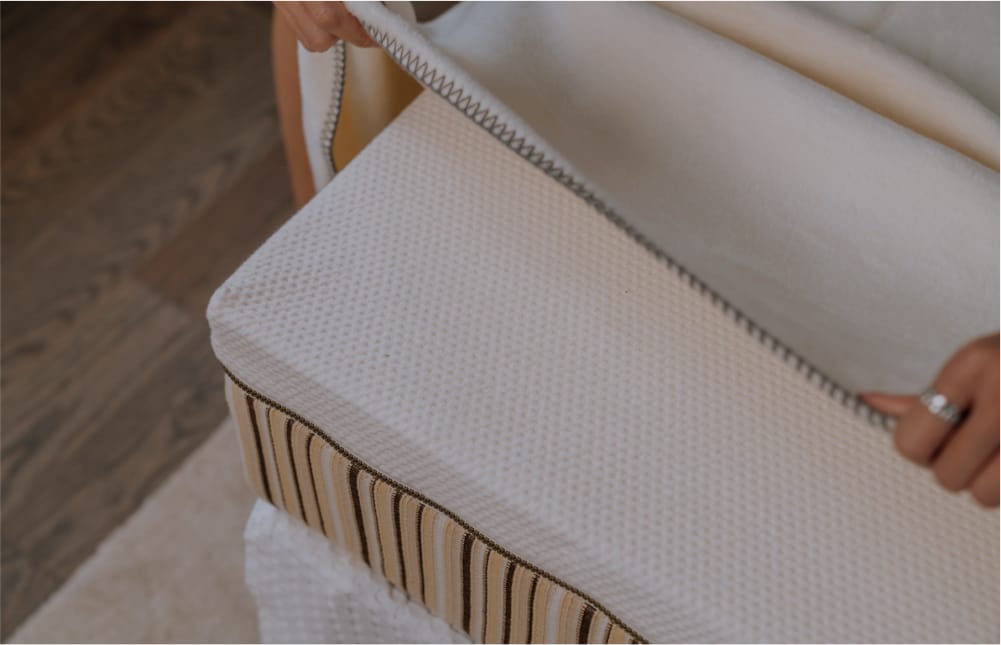
All Essentia organic mattresses feature a GOTS certified organic cotton cover that can be easily removed for cleaning.
Manufacturing Footprint
Every Essentia mattress is produced in a state-of-the-art facility in the United States that prioritizes responsible energy use and minimal waste. The manufacturing process is designed to reuse materials whenever possible, limit chemical exposure, and create a safe, low-emission workspace.
By focusing on local production and strict quality control, Essentia reduces unnecessary transport emissions and supports ethical labor practices.
Essentia’s mattresses are compressed and vacuum-packed before shipping, allowing more products to be shipped in fewer loads. This efficient packaging reduces freight-related emissions and lessens the carbon footprint associated with delivery. Once unboxed, each mattress quickly returns to its original shape—ready for years of comfortable, sustainable sleep.
Certifications That Matter
Essentia’s commitment to environmental and health standards is backed by multiple third-party certifications:
GOLS Certified (CU #847578)
Essentia is a GOLS (Global Organic Latex Standard) certified facility, authorized to manufacture organic finished goods using latex with more than 95% certified organic content. This certification ensures a transparent chain of custody from farm to factory, verifying that Essentia’s Beyond Latex™ organic foam meets the world’s highest organic latex standard.
GOTS Certified (CU #847578)
Essentia’s factory holds the GOTS 6.0 (Global Organic Textile Standard) certification, confirming that every step of its textile production—from fiber harvesting to final sewing—follows strict organic and ethical guidelines. All Essentia mattresses and organic bedding use 100% GOTS-certified cotton and wool for clean, traceable materials.
Beyond Organic® Standard
Essentia’s self-managed Beyond Organic® Standard reflects its core philosophy: products that are clean, ethical, vegan, and cruelty-free. Every material is chosen for purity and performance, protecting indoor air quality while promoting deep recovery and regenerative sleep.
Clean Air Tested (Exova Labs)
Independent testing by Exova Labs confirmed that VOC and formaldehyde levels in Essentia mattresses were indistinguishable from background household air. This validates the brand’s commitment to maintaining the highest indoor air-quality standards.
Worker Safety Tested
Testing conducted by Quebec’s Health and Safety Board found zero hazardous emissions during foam production. Essentia employees require no masks or protective gear—demonstrating that Beyond Latex™ organic foam is safe for both sleepers and workers.
Well Living Lab Founding Member
As a founding member of the Well Living Lab, a partnership between Delos and the Mayo Clinic, Essentia contributes to research improving human health in indoor environments. This collaboration reflects Essentia’s long-term focus on wellness science.
Hippocrates Health Institute Approved
Essentia is the only mattress approved by the Hippocrates Health Institute, where its mattresses are featured campus-wide. This endorsement underscores Essentia’s alignment with holistic health and detox-based lifestyle principles.
Oeko-Tex Standard 100 Class 1 Certified
All latex used in Essentia mattresses meets Oeko-Tex Standard 100 Class 1, the strictest safety level suitable for infants. It confirms the materials are free from harmful substances and safe for the most sensitive users.
EuroLatex ECO Standard Compliant
Essentia’s Dunlop latex complies with the EuroLatex ECO Standard, which tests for heavy metals, pesticides, solvents, and VOCs. This European certification guarantees that Essentia’s latex meets stringent health and environmental benchmarks.
These certifications confirm that each mattress contributes to a healthier home and a more sustainable planet—without compromising comfort or quality.
Health Benefits for Side Sleepers on an Essentia Organic Mattress
Improved Air Quality
Since side sleepers rest close to the surface, organic materials free from VOCs prevent nighttime irritation and improve respiratory comfort, such as Essentia’s GOLS certified organic latex foams
Pressure Relief and Circulation
Essentia’s patented Beylong LatexTM organic latex cradles high-pressure zones — shoulders, hips, and knees — allowing muscles to relax fully. This promotes healthy blood flow and reduces the tingling or numbness side sleepers sometimes experience.
Reduced Allergens
Tested by Dr. Robert G. Hamilton of the Johns Hopkins School of Medicine, Essentia’s organic atex is impervious to dust mites, and the high-acidity foam formulas diminish the growth and spread of mold. This matters especially for side sleepers whose faces remain near the pillow and mattress, where allergens tend to collect.
Calmer, More Restorative Sleep
The absence of toxins supports a calmer nervous system. Without irritants disrupting your REM cycles, you wake refreshed and free from stiffness or inflammation.

Evaluating Organic Mattresses: What to Demand
Understanding Mattress Feel: Support, Firmness, and Contouring
The way a mattress feels is more than personal preference—it affects posture, circulation, and overall recovery. Comfort and support come from how well a mattress balances firmness with pressure relief.
Firmness vs. Support
Firmness describes how soft or hard a surface feels under the body, while support refers to how effectively the mattress keeps the spine aligned. A firm mattress may feel sturdy but can still fail to support proper posture if it creates pressure points at the hips or shoulders.
The goal is to find a surface that supports the body evenly without causing tension or sinking too deeply in one area. A medium firm feel with a balanced feel is ideal for a wide range of sleeping positions, providing enough support and comfort for side, back, and stomach sleepers alike.
How Organic Latex Responds
Organic latex behaves differently from conventional foams or spring systems. It offers progressive resistance, meaning it gently compresses under light weight and becomes more supportive as pressure increases. This creates responsive comfort—soft where you need relief, firm where you need structure.
Latex also has a natural bounce that prevents the “stuck” feeling often associated with a memory foam mattress, while still contouring to the body for balanced pressure distribution.
The naturally springy and responsive mattress qualities of latex make it especially suitable for combination sleepers who change positions frequently throughout the night.
Contouring Without Sinking
Essentia’s Beyond LatexTM organic foam conforms to the body’s curves without excessive sagging, helping maintain neutral spinal alignment throughout the night. This support helps reduce tension in the lower back, neck, and shoulders while promoting free movement and consistent airflow.
Deep contouring from organic latex foam supports different sleeping positions by adapting to the body's shape, ensuring comfort whether you sleep on your side, back, or stomach. The buoyant nature of latex also means that couples experience less motion transfer, contributing to uninterrupted rest.
Foundation Requirements
An organic mattress performs best on a solid, supportive base. A platform foundation, slatted frame with narrow spacing, or adjustable base provides stable, even support for the latex core. Avoid box springs or uneven surfaces that can cause sagging over time. The right foundation not only extends the lifespan of the mattress but also maintains its performance—ensuring that comfort and alignment remain consistent for years.
A mattress made with organic latex and proper foundation support offers the best balance between comfort, responsiveness, and structure—helping you wake up refreshed and well-supported every day.
Matching Mattress to Sleeper
Finding the right organic mattress means understanding how your body interacts with its surface. The ideal mattress supports spinal alignment, relieves pressure, and maintains comfort throughout the night—no matter how you sleep.
Body Weight Considerations
- Under 130 lbs: Softer comfort layers allow deep contouring for lighter bodies.
- 130–230 lbs: Medium or medium-firm options balance pressure relief and support.
- Over 230 lbs: Slightly firmer constructions prevent hips from sinking too far, protecting spinal curvature.
Organic latex naturally adjusts to each sleeper’s weight, delivering responsive support across all body types.
Sleep Position Priorities
Each sleep position has unique requirements:
- Back Sleepers need
- balanced lumbar support to keep the spine neutral and prevent lower back strain.
- Side Sleepers benefit from gentle contouring at the shoulders and hips to reduce pressure points and maintain circulation.
- Stomach Sleepers require a firmer feel that prevents the midsection from sinking too deeply, which can lead to neck or back hyperextension.
Different sleeping positions require specific firmness options and just enough cushioning to provide great pressure relief and excellent pressure relief, ensuring comfort and support for all sleep styles.
Organic latex naturally adapts to these needs, compressing gently under pressure while remaining supportive at the core.
Couples
For shared beds, movement isolation and edge stability are key. Latex’s natural elasticity allows for quiet motion response, so one sleeper can move without disturbing the other. Reinforced edges provide stable support across the full width of the mattress, making it easier to sit or sleep near the perimeter.
Many couples find that organic latex offers the best compromise between bounce and stability. California king and split California king sizes are available for couples who want more space or individualized firmness options to suit different preferences.
Edge Support
Edge support is crucial for maximizing usable sleep surface and aiding mobility, especially for combination sleepers who change positions frequently. Strong edge support also helps minimize motion transfer, making it easier for partners to move without disturbing each other.
Temperature Regulation
Latex and organic fabrics such as cotton and wool breathe naturally.8 Microscopic air channels within latex foam promote airflow, helping maintain a neutral temperature throughout the night. Wool adds humidity control by wicking away moisture while staying cool to the touch9. Together, these materials create a balanced microclimate for consistent comfort year-round.
When your mattress no longer provides adequate support or comfort, responsibly disposing of your old mattress—through recycling or donation—helps reduce environmental impact.
Purchase Considerations: Trial, Warranty, and Lifecycle
Buying an organic mattress is both a comfort decision and an investment in long-term wellness. Understanding what to expect from delivery to end-of-life helps ensure satisfaction and sustainability.
Trial Periods
Adapting to a new mattress can take several weeks. During your first 30 to 120 nights, pay attention to spinal comfort, shoulder and hip pressure, and temperature balance. The goal is to confirm that the mattress supports your natural posture and helps you wake up feeling rested.
A generous sleep trial allows you to test the mattress at home risk-free, ensuring you have enough time to decide if it meets your needs before committing.
Warranty Coverage
A strong warranty reflects product confidence. Look beyond the number of years and examine what’s actually covered—such as body impressions, material defects, or zipper failure. True quality is measured by how well the brand stands behind its craftsmanship, not just the warranty’s length.
Return Policies
If a mattress doesn’t meet expectations, reputable manufacturers simplify the return process. Some may apply restocking fees, while others coordinate pickup and donation to local charities. Refunds are typically processed after the product has been returned or collected for recycling.
End-of-Life Responsibility
Organic mattresses can be recycled or composted more easily than synthetic ones10. Latex, cotton, and wool are biodegradable, breaking down naturally without releasing toxins. Responsible disposal options include donation, mattress recycling programs, or composting where available—reducing landfill waste and closing the sustainability loop.
A mindful purchase considers comfort today and environmental impact tomorrow. By choosing a certified organic mattress and managing its full lifecycle responsibly, you contribute to cleaner homes and a healthier planet.
Comprehensive FAQ: Your Questions Answered
Health & Safety
No. Organic latex and certified textiles contain no polyurethane or chemical adhesives, so they do not release volatile organic compounds (VOCs). You may notice a mild, natural latex scent that fades quickly and poses no health risk.
Absolutely. Certified organic materials are free from harmful chemicals and flame retardants, creating a cleaner environment for developing respiratory systems. Their durability also makes them ideal for long-term use as your child grows
Yes. They are made without synthetic foams, adhesives, or fragrances that can trigger reactions. Certified organic latex and fabrics create a low-emission, hypoallergenic sleep space for individuals with Multiple Chemical Sensitivity (MCS).
They do. Organic latex and wool naturally deter dust mites, bacteria, and mold by regulating humidity and maintaining airflow. This makes them excellent choices for allergy-prone sleepers.
Metal-free construction avoids electromagnetic field (EMF) amplification that can occur with coil springs. This contributes to a calmer, electrically neutral sleep environment. Essentia has taken this a step further with it's EMF Protection Foam Upgrade, available in the Dormeuse REM9 Active, Classic REM5 Active, Stratami, and Tatami. This foam upgrade protects your blood cells from erratic EMFs allowing them to flow freely through the body.
By removing VOCs and flame retardants, organic mattresses help maintain cleaner indoor air. This can reduce irritation, especially in enclosed spaces like bedrooms or nurseries.
Comfort, Support & Performance
A medium or medium-soft mattress balances contouring and alignment, cushioning pressure points while keeping the spine straight11.
Doctors often recommend medium or medium-soft latex mattresses for side sleepers. These models offer enough give to cushion pressure points while maintaining spinal alignment — a key factor in preventing shoulder and hip pain.
Yes. Organic latex supports spinal alignment by contouring to body curves while maintaining resilience. This combination relieves tension in the shoulders, hips, and lower back—helping many people wake up with less stiffness.
A great mattress offers excellent pressure relief and a responsive surface, which quickly adapts to movement and reduces pressure points for all sleep positions.
Some sleepers may find organic latex slightly firmer during the first few nights. The material quickly adjusts to body weight and temperature, softening subtly with use while maintaining consistent support.
Yes. Latex has an open-cell structure that promotes airflow, while organic cotton and wool wick away moisture. This combination keeps temperatures balanced in every season. Essentia performance mattresses also feature Active Cooling with the addition of activated quartz which actively keeps the surface of the mattress cool by pulling the heat from the mattress surface as you expel heat as you sleep.
Yes. Organic latex mattresses flex naturally without losing structure, making them compatible with adjustable and platform bases. Always check spacing between slats (no more than 3 inches) for proper support.
Yes, slightly. Natural latex is denser than polyurethane foam, which adds weight, but also provides better durability and stability. Two adults can easily move most queen or king models with side handles.
With proper care, an organic latex mattress can last 15–20 years12—nearly twice as long as most conventional mattresses. The dense, resilient latex maintains shape and performance without sagging.
Care & Maintenance
Spot clean with mild soap and warm water—never saturate the mattress surface. For covers with zippers, check if they’re removable and machine washable. Always allow full air drying before replacing bedding.
Rotate your mattress every 3–6 months to distribute natural wear evenly. Most organic mattresses are single-sided and should not be flipped unless specified by the manufacturer.
Excess moisture can shorten the lifespan of organic fibers. Use a breathable mattress protector and maintain proper ventilation in your bedroom to prevent mold growth. Essentia's organic foam featured high acidity essential oils that diminish the growth of mold.
Sustainability & End-of-Life
Yes. Organic latex, cotton, and wool can break down naturally or be separated for recycling. Many local recycling centers accept latex foam for repurposing into new products. When your old mattress reaches the end of its life, consider responsible disposal or recycling to reduce environmental impact.
In fact, an Essentia organic mattress will fully biodegrade over 3 years when left exposed to the elements.
Yes. Latex’s breathable structure and wool’s moisture-wicking properties make it resistant to humidity and mildew. Proper airflow under the bed keeps the materials fresh year-round.
Lifestyle & Purchasing
Yes. All Essentia organic mattresses are vegan and do not have any wool or animal byproducts. use only GOTS-certified cotton and latex. These versions maintain the same organic integrity without animal-derived materials.
Yes. Though the upfront cost may be higher, longevity, comfort, and health benefits make it a cost-effective choice. You’ll sleep on safer materials, breathe cleaner air, and enjoy years of consistent support. Many brands also offer a generous sleep trial, allowing you to test the mattress at home risk-free before fully committing.
Citations
Batterman, S. A., et al. “Characterization of Volatile Organic Compound Emissions from Polyurethane Mattresses.” Environmental Science & Technology. American Chemical Society. https://pubs.acs.org/doi/10.1021/acs.est.9b01557
Logue, J. M., et al. “Hazard Assessment of Chemical Air Contaminants Measured in Residences.” Indoor Air. National Library of Medicine. https://pubmed.ncbi.nlm.nih.gov/24548111/
Radwan, A., et al. “The Influence of Mattress Stiffness on Spinal Curvature and Disc Loading in the Lumbar Spine.” Journal of Physical Therapy Science. PubMed Central. https://pmc.ncbi.nlm.nih.gov/articles/PMC9311775/
Lee, J., et al. “Body Pressure Distribution and Spinal Alignment during Sleep.” Journal of Physical Therapy Science. PubMed Central. https://pmc.ncbi.nlm.nih.gov/articles/PMC4868192/
Hsu, Y.-L., et al. “Evaluation of Mattress Materials by Body Pressure Distribution and Spinal Alignment in Different Sleeping Positions.” Applied Ergonomics. PubMed Central. https://pmc.ncbi.nlm.nih.gov/articles/PMC5310954/
Fernández, M., et al. “Thermal and Comfort Properties of Latex and Cotton-Based Textile Structures.” Materials Letters. ScienceDirect. https://www.sciencedirect.com/science/article/abs/pii/S0167577X19315484
Yao, B., et al. “Moisture Management and Thermal Comfort Properties of Wool Fabrics.” Applied Surface Science. ScienceDirect. https://www.sciencedirect.com/science/article/abs/pii/S0169433215005814
Camino, G., et al. “Fire Retardant Mechanisms in Silica and Wool Systems.” Polymer Degradation and Stability. ScienceDirect. https://www.sciencedirect.com/science/article/abs/pii/S0141391007002674
Hassan, N. M., et al. “Thermal Decomposition and Fire Retardancy of Wool Fibers.” Journal of Thermal Analysis and Calorimetry. PubMed Central. https://pmc.ncbi.nlm.nih.gov/articles/PMC8659226/
Subramanian, M., et al. “Assessment of Material Fatigue and Durability in Latex Foam Structures.” Polymers. PubMed Central. https://pmc.ncbi.nlm.nih.gov/articles/PMC10004622/
Fernández, E., et al. “Biodegradation of Natural and Synthetic Textile Materials under Marine Conditions.” Marine Pollution Bulletin. ScienceDirect. https://www.sciencedirect.com/science/article/abs/pii/S0025326X21000643
Fang, Y., et al. “Effects of Mattress Firmness on Spinal Alignment and Pressure Distribution in Different Sleep Positions.” European Spine Journal. Europe PMC. https://europepmc.org/article/med/34878594
